Build Your Personality
By: Victor Daniel | Updated By: Effykon Umo | On 19-08-2023
The pursuit of excellence requires that we
have a total understanding of our unique gifts and abilities. We are expected
to build our personality to enable us to accomplish the task ahead of us. In
the course of our lives, we need to reflect on our abilities and what we can
achieve within a time frame. We certainly need to evaluate the content of our
character, our unique strengths, and our abilities to maximize our potential.
In our desire to achieve greater heights,
we should have a total understanding of ourselves and what we could likely do
when life throws those challenges at us. It is also relevant for us to have a
unique way of expressing ourselves so that we will not drift into what we
should not reflect in the process of taking giant strides.
Excellence is not simply about becoming
better than someone else. It is about becoming the best version of what God has
designed you to become and faithfully using what He has placed in your hands.
There is something unique about every individual, and discovering that
uniqueness is an important part of living a purposeful life.
In our desire to be at our best and to
attain greater heights, we need to depend on God for His divine help to achieve
our goals and aspirations. We also need to lean on God, who can make us whole
even with our inadequacies. It is time to be bold in Christ and to grow in His
divine strength. We should be intentional about the growth that we desire, as
we deliberately activate it. We should also be consistent with God's Word and
abide in Him to express good deeds.
Isaiah 40:31 says, “But they that wait
upon the LORD shall renew their strength; they shall mount up with wings as
eagles; they shall run, and not be weary; and they shall walk, and not faint.”
Jesus also said in John 15:4-5, “Abide in
me, and I in you... for without me ye can do nothing.” Our pursuit of
excellence must therefore not separate us from God. The higher we desire to go,
the deeper our dependence on Him should become. Success without God may give a
person recognition, but true fulfillment comes when our abilities and
achievements are submitted to His purpose.
A man who doesn't have a total
understanding of himself will likely struggle with his imperfections and
shortcomings and possibly lose his self-worth. This might damage his
self-esteem, deplete his energy, and reduce his desire to push forward and
attain excellence.
Everyone should be comfortable with what
they have, even as they strive to attain greater heights consistently. God has
given you every resource to be at your best; as such, you should keep building
on them to attain greater heights.
Read: What A Mysterious Wedding!
You do not need to become another person
before you can become excellent. You need to discover what God has deposited in
you, develop it, discipline yourself, and consistently put it to work.
You could consider these concerns to be at
your best consistently:
1. Identify and embrace your
peculiarities
Everyone has been created to excel
uniquely. We all have peculiarities that are exclusive to us. As such, we need
to be confident in all we do, be intentional in developing ourselves, and rise
with the desire to attain greater heights.
Your uniqueness is not a mistake. The
things that make you different may eventually become the very things that
distinguish you. Sometimes, we spend too much time comparing ourselves with
others, so we fail to recognize what God has already placed within us.
Psalm 139:14 says, “I will praise thee;
for I am fearfully and wonderfully made.” There is a reason you were created
with your particular personality, abilities, experiences, and opportunities.
This does not mean that everything about you is already perfect, but it means
you have something worth developing.
You may not be the fastest learner, the
most outspoken person, the strongest person, or the most talented person in the
room. But you may have something else that another person does not have. Do not
despise yourself because someone else appears to be ahead of you. Instead, ask
yourself: What has God placed in me? What can I do with what I have? What can I
become if I consistently develop myself?
The parable of the talents in Matthew
25:14-30 reminds us that each servant received something to work with. Their
portions were different, but each person was expected to be productive with
what had been given. God is not asking you to produce with someone else's
ability. He expects you to be faithful with yours.
Identify your strengths, your weaknesses. Identify
the areas where you need improvement. Identify the opportunities around you. And
most importantly, identify the purpose for which you are living. Self-awareness
is not pride. It is an honest understanding of who you are, what you can do,
where you need growth, and where you need God's help.
Read: You Can Experience A New Beginning
2. Avoid the wrong association
It is very certain that “evil
communications corrupt good manners” (1 Corinthians 15:33, KJV). Your ability
to maximize your potential and build your personality is dependent on your
circle of friends and the quality of your acquaintances. You need to be
contented with what you have at the present while building yourself to push
past every limitation to achieve excellently.
The people around you can influence the
way you think, the decisions you make, the things you pursue, and even the way
you see yourself. This is why choosing your associations is not something that
should be treated casually.
Proverbs 13:20 says, “He that walketh with
wise men shall be wise: but a companion of fools shall be destroyed.” You
cannot consistently surround yourself with people who discourage growth,
celebrate mediocrity, encourage wrong behavior, or constantly make you doubt
yourself and expect your personality to remain unaffected.
This does not mean that you should hate
people who are different from you. Jesus interacted with different categories
of people, including sinners, but He never allowed their lifestyle to redefine
His identity or compromise His purpose. There is a difference between being a
light to people and allowing darkness to influence you. You can love people
without becoming like them.
Your association should challenge you to
become better. It should encourage you to pursue God. It should make you think
bigger. It should correct you when you are wrong. It should celebrate your
growth without becoming jealous of your progress.
You also need people who will tell you the
truth when everyone else is praising you. Sometimes, the right association is
not the person who always agrees with you, but the person who genuinely wants
to see you become better.
3. Build on your strengths
We have been fashioned with a lot of
energy to keep moving in the right direction despite the limitations that face
us daily. This understanding enables us to focus more on our strengths and less
on our weaknesses. We also need God's Word as a perfect guide to strengthen us
in times of inadequacy.
God expects us to be at our best and
impact others positively. As such, we need to move from strength to strength
and make positive strides consistently. Your strength becomes valuable when it
is developed. Talent without discipline may remain potential, while ability
without consistency may never produce excellence.
Do not simply admire what you are good at;
develop it. Read about it. Practise it. Learn from people who are ahead of you.
Accept correction. Take opportunities to use it. Allow yourself to grow through
mistakes. Paul told Timothy in 1 Timothy 4:14-15 not to neglect the gift that
was in him but to give himself wholly to his development so that his progress
could be evident to everyone.
Read: Unity As A Necessity For God's Blessing
Progress becomes visible when preparation
meets consistency. You may have a beautiful voice, but you need to develop it. You
may be a writer, but you need to write consistently. You may be a preacher, but
you need to study the Word.
You may be a businessperson, but you need
to learn how to manage resources. You may be a filmmaker, but you need to
improve your craft. You may be a teacher, but you need to keep learning. Whatever
gift you have, do not allow the fact that you are not yet perfect to become an
excuse for refusing to start. Excellence grows through intentional practice.
4. Work on your weaknesses
Focusing on your strengths does not mean
ignoring your weaknesses. A balanced person understands both. Your weaknesses
reveal areas where you need growth, discipline, wisdom, training, or help from
others.
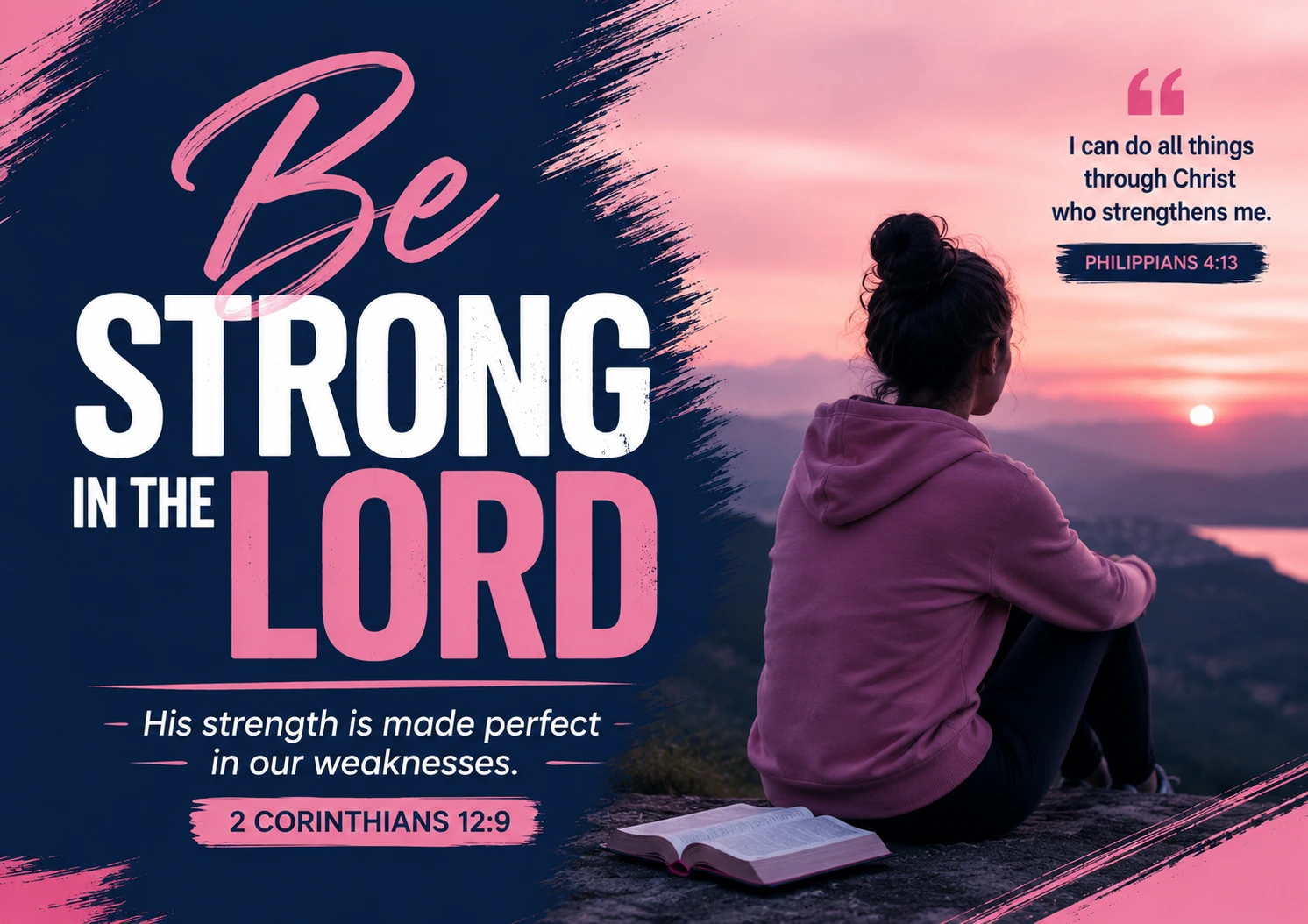
Paul acknowledged his weakness when he
pleaded with God concerning his challenge. God's response was, “My grace is
sufficient for thee: for my strength is made perfect in weakness” (2
Corinthians 12:9).
Your weakness does not have to become your
identity. It can become an area where God's grace and your intentional effort
produce remarkable growth. There are things you may not be able to change
immediately, but you can begin to work on them. If you struggle with
communication, learn to communicate better. If you struggle with discipline,
develop healthy routines. If you struggle with anger, learn self-control. If
you struggle with fear, build your faith. If you lack knowledge, study. If you
lack experience, learn from those who have gone ahead. Growth begins when we
stop making excuses for the areas that need attention and begin taking
responsibility for our development.
5. Be consistent with God's word
The pursuit of excellence should never
make us forget the One who gave us the ability to excel. Joshua 1:8 says, “This
book of the law shall not depart out of thy mouth; but thou shalt meditate
therein day and night... for then thou shalt make thy way prosperous, and then
thou shalt have success.”
God's Word gives us more than spiritual
information. It gives us principles for character, discipline, wisdom,
relationships, leadership, integrity, and purposeful living. When we remain in
God's Word, we are constantly reminded of who we are and whom we represent.
The world may measure excellence by
achievement, money, status, popularity, or influence. But God also looks at the
character behind the achievement. What is the quality of your heart? What
happens when nobody is watching? Who are you becoming while pursuing what you
want?
Proverbs 22:1 says, “A good name is rather
to be chosen than great riches.” It is possible to achieve great things and
lose the character required to sustain them. That is why character must grow
alongside capacity.
6. Be patient with your growth
One of the mistakes people make in the
pursuit of excellence is expecting immediate results. We want to become experts
overnight, build successful businesses quickly, grow spiritually instantly, or
achieve in months what may require years of preparation.
But growth takes time. A seed does not
become a tree overnight. A child does not become an adult in a day. A beginner
does not become an expert after one attempt. Permit yourself to grow while
refusing to remain stagnant. Galatians 6:9 says, “And let us not be weary in
well-doing: for in due season, we shall reap, if we faint not.”
Your responsibility is to remain faithful
to the process. Keep learning. Keep improving. Keep praying. Keep working. Keep
trusting God. Do not compare your beginning with another person's middle. Do
not compare your chapter two with someone else's chapter twenty. There is a
season for preparation, a season for growth, and a season for manifestation.
Learn to appreciate each season while preparing for the next.
Read: Are You Truly Saved?
7. Let God be at the center of
your excellence
God expects us to be at our best and
impact others positively. As such, we need to move from strength to strength
and make positive strides consistently. However, excellence should never become
an idol. Your achievement should not become more important to you than your
relationship with God.
Colossians 3:23 says, “And whatsoever ye
do, do it heartily, as to the Lord, and not unto men.” This is the heart of
Christian excellence. We are not merely pursuing success so that people can
celebrate us. We are developing ourselves so that our lives can become useful
in the hands of God and a blessing to others.
You have been given something. You have a
gift. You have abilities. You have experiences. You have opportunities. You
have potential. And you have a God who can help you become all that He has
called you to be. Do not despise what you have because it looks small. Do not
bury your talent because you think someone else is better. Do not allow your
weaknesses to convince you that you cannot become better.
Start from where you are. Build with what
you have. Learn what you do not know. Strengthen what is weak. Develop what is
strong. Choose your associations wisely. Remain consistent with God's Word, and
allow God to direct your steps. Excellence is not achieved in one giant leap.
It is often built through small, faithful, intentional steps taken repeatedly. God
has given you every resource to be at your best; as such, you should keep
building on them to attain greater heights.
You may not have arrived yet, but you do
not have to remain where you are. There is always another level of growth,
another opportunity to learn, another weakness to overcome, another gift to
develop, and another person to impact.
Finally, keep becoming. Keep growing. Keep
trusting God. Keep giving your best. And as you move from strength to strength,
may your life become a testimony of what God can do with a person who is
willing to discover, develop, and faithfully use what He has placed within
them.










Leave your comments here