Why Must Believers Live in Love? 3 Biblical Reasons
By: Keyu Okoi | Updated By: Effykon Umo | On 26-08-2026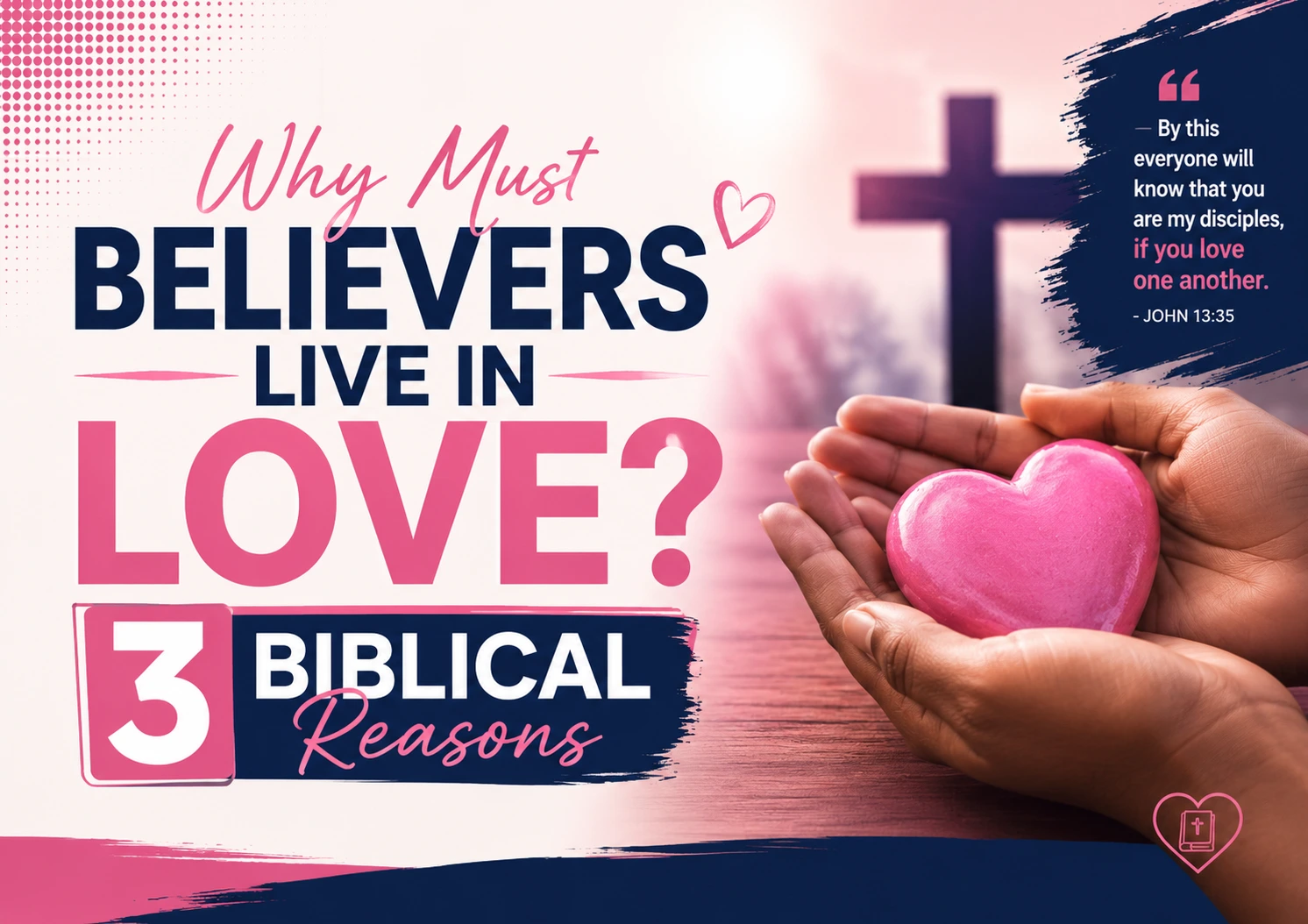
Love is arguably the most used word in
existence and the most common, in the sense that a toddler can mutter the
words, “I love you, Mummy,” without fully grasping what it means to love. But
just like children, our lips are likely to keep saying the word “love” even
when we have not fully come to the understanding of what God has shown it to
mean. Love is that deep feeling of affection that is expressed towards a
person, and in God, we have the genuine meaning of love interpreted.
The Bible's definition of love is seen in
1 Corinthians 13:4-8a: “Love is patient, love is kind. It does not envy, it
does not boast, and it is not proud. It does not dishonour others, it is not
self-seeking, it is not easily angered, and it keeps no record of wrongs. Love
does not delight in evil but rejoices with the truth. Love bears all things,
believes all things, hopes all things, and endures all things. Love never
fails...”
These words reveal that love is much more
than an emotion. Love is a way of life, a decision, an attitude, and a
character that is expressed through our actions towards God and towards other
people. The Bible has not only given us a description of what it means to love;
it has also shown us through the life Jesus Christ lived, exemplary for man's
imitation.
In John 3:16, the familiar Scripture says,
“For God so loved the world, that He gave His only begotten Son...” In sending
His Son, God expressed love; He sacrificed for love, and He gave man unlimited
access to His person. Thus, God was saying, 'The love I have for man is
endless!'
As long as man sees God and repents of his
unacceptable deeds, he will be revealed to the abundant love that is in Christ
Jesus. For it is the love of Christ in us that empowers us to love. “We love
Him because He first loved us.” 1 John 4:19. It is because God's personality is
love that it is impossible to please God without loving. No lover wishes to
only be at the giving end without receiving. The love God expects from man is
love that emanates from Him to man. And that is why the Bible has given us a unique
description of God: “God is love!”
So, when man expresses love, he is living
in the image of God. For love, amongst other virtues, is a fruit of the
Spirit—evidence that we know God and that we love God. Henry Drummond shared
his opinion on love: “To love abundantly is to live abundantly, and to love
forever is to live forever.” Man begins to live truly when he starts loving
genuinely. We can reach our full potential when we give ourselves to selfless
service.
Your ability to see yourself beyond who
you are, to seize every opportunity to use your talents, time, and possessions
for the good of others, can only be done when love dwells within you. Selfless
service is one evidence of God's love in us. Love moves us beyond ourselves. It
makes us see the needs of others and gives us the willingness to become an
answer where we can.
God's love is everlasting, and so is our
service to God and man, to serve wholeheartedly and love till eternity. At the
end of life, what we will never stop doing is sharing this love of God in our
hearts abroad.
WHY MUST BELIEVERS LIVE IN
LOVE?
1. Love is a command
In Matthew 22:38, Jesus Christ laid great
importance on love, for He said, “This is the first and greatest commandment.”
Every believer has been called to love and
to remind others of this obligation. Even though man might try to exempt
himself from this, a genuine child of God cannot and is not allowed to because
love is the foundation whereby man is saved.
It is on the grounds of love that we are
given eternal life. Everyone who fails to carry out this command fails to
understand the nature of the life Christ has called us to live. One way to show
you are loyal to a person and committed to that person is through obedience. We
show that we love God when we obey His command.
Jesus said in John 14:15, “If ye love me,
keep my commandments.” Love for God cannot remain only in our words. It must
eventually find expression in our obedience, our choices, our relationships,
and the way we treat other people. Let love be given room in your heart and
nourished to grow.
Read: When To Seek Help In Times Of Need: Knowing When And Who To Call
Sometimes, we want to love only when it is
convenient, when people deserve it, or when we are certain that our love will
be returned. But the love Christ teaches us is greater than convenience. It
calls us to love even when it requires patience, forgiveness, sacrifice, and
understanding. This does not mean accepting wrongdoing or allowing people to
continually hurt us. Biblical love can include boundaries, correction, wisdom,
and truth, because genuine love does not celebrate evil but rejoices with the
truth.
2. We are representatives of
who god is
As representatives of God, we must walk in
alignment with who God is, and that is love. This answers the question of why
God has given us the command to love amongst other virtues that exist.
“A new commandment I give unto you, that
ye love one another; as I have loved you, that ye also love one another. By
this everyone will know that you are my disciples if you love one another.”
John 13:34-35.
Jesus made love a command so that we can
reflect His nature, so that others will recognise that we are God's children
and become drawn into His kingdom by our loving actions. When we practise love,
we respond to a test of our love for God. The ability to forgive, do good to
our neighbours, consistently reach out to others, teach, and even influence
others to love is made possible when we are able to love and intentionally practise
it.
People may not read the Bible because of
us, but they are constantly reading our lives. Our reactions, conversations,
attitudes, and treatment of others can either make the message of Christ
attractive or create a barrier to it. Jesus said that people would know His
disciples by their love.
This means that love is not merely one of
the things that should distinguish Christians; it is one of the clearest ways
the world should recognize the presence of Christ in us. Colossians 3:14 says,
“And above all these things put on charity, which is the bond of perfectness.”
When love governs our relationships, we
become less interested in proving ourselves right and more interested in
reflecting Christ. We become willing to forgive, to listen, to encourage, to
serve, and to give people room to grow.
3. To find healing and restore
others
Love is magical, and so it is when
expressed. The prodigal son is a good parable that illustrates the abilities of
love. When the prodigal son realised he had nothing to live for and was in a
strange land, one thing that gave him hope was that he could go back home and
the love his father had for him would be enough to deliver him from
destruction.
If his father was rigid and devoid of
love, going back wouldn't have been an option. So the prodigal son knew that he
would find healing when he returned home, and so he did. It is the same way we
can restore others when we love them and express it always. You might not know
what a person is going through, but through your conversation, your time spent,
and physical or emotional help, you can be a source of restoration to that
person. Love heals and love restores.
Read: How to Know a True Friend When Life Gets Hard: Lessons From Betrayed Friendship
There are people around us who may be
smiling while carrying deep wounds. Some may be struggling with rejection,
disappointment, loneliness, failure, grief, or guilt. A simple act of genuine
love may become the encouragement they need to take another step. Proverbs
12:25 says, “Heaviness in the heart of man maketh it stoops: but a good word
maketh it glad.”
Sometimes, restoration begins with a good
word. Sometimes it is a listening ear. Sometimes it is forgiveness. Sometimes
it is showing up when everyone else has left. And sometimes, it is simply
reminding someone that they are not alone. This is why believers must not
underestimate the power of kindness.
Galatians 6:2 says, “Bear ye one another's
burdens, and so fulfil the law of Christ.” Love makes us willing to carry
another person's burden without making them feel ashamed for needing help.
Orson Welles wrote, “We're born alone, we
live alone, we die alone; only through our love and friendship are we able to
create an illusion for the moment that we are not alone.” Though man's common
assessment of love is termed an illusion, and with experiences of how people
easily fall out of love, love has been given a limited experience.
But the love that is found in God, which
He has introduced man to, is one that is everlasting and is expected to be
practised by all believers. To love is to live selflessly, and it is there man
begins to live a purpose-driven life. A life centred only on self eventually
becomes empty, but a life poured out in love becomes meaningful because it
begins to affect people beyond the individual.
First, John 4:7-8 says, “Beloved, let us
love one another: for love is of God; and every one that loveth is born of God,
and knoweth God. He that loveth not knoweth not God; for God is love.”
This is the heart of the matter. We cannot
claim to know the God of love while deliberately refusing to walk in love. Love
is not weakness. Love is not the absence of truth. Love is not allowing people
to take advantage of us. Love is choosing to reflect the character of Christ
even when our flesh wants to respond differently.
Read: When Night Comes, Go Home
It is choosing forgiveness when bitterness
appears more attractive. It is choosing kindness when anger feels justified. It
is choosing patience when someone is difficult. It is choosing generosity when
selfishness feels easier.
And above all, it is allowing the love we
have received from God to flow through us to other people. The world does not
only need believers who can preach about God's love. It needs believers who can
demonstrate that love in practical ways. The hungry need compassion. The lonely
need friendship. The broken need encouragement. The confused need guidance. The
wounded need someone willing to walk with them. And the lost need to encounter
the love of Christ through people who genuinely represent Him.
You may not be able to change the whole
world at once, but you can change someone's world through one expression of
genuine love. At the end of everything, our achievements, possessions,
positions, and influence will not be the greatest evidence of the life we
lived.
What will matter is whether we allowed the
love of God to transform us and flow through us to others. Love God. Love
people. Serve selflessly. Forgive genuinely. Speak the truth in love. Give
generously. Encourage intentionally. Because when God's love becomes the
foundation of your life, you do not merely tell people about Christ—you allow
them to experience something of Christ through you. And that is where true love
begins.










Leave your comments here