Family Relationship
By: Keyu Okoi | Updated By: Effykon Umo | 15-08-2023
A family relationship expresses the
connection, affection, responsibility, and sense of belonging among family
members. It is the first relationship most people experience after birth and,
in many ways, the first environment in which they learn what love, trust,
communication, responsibility and conflict look like.
As the saying goes, “Charity begins at
home,” and many of our attitudes, values, and behaviours begin there. The home
is a child's first classroom, and parents and older family members often become
the first teachers, role models and examples from whom children learn. Before a
child understands what society expects, he or she has already begun learning
from what happens within the family.
This is why people often reproduce the
patterns they grew up with. A person raised in an environment where kindness,
respect, and open communication are encouraged may naturally find it easier to
demonstrate these qualities. On the other hand, someone who grows up around
constant criticism, hostility, neglect, or poor communication may unknowingly
carry some of those patterns into adulthood.
However, our upbringing does not have to
become our permanent identity. Negative patterns can be unlearned, and healthy
habits can be intentionally developed. With awareness, discipline, and a
willingness to grow, individuals and families can create a better environment
than the one they may have inherited.
Mario Puzo once observed that “the
strength of the family is like that of an army, which lies in its loyalty to
each other.” There is considerable wisdom in this thought. A strong family does
not become strong by accident. It becomes strong because its members
consistently make choices that strengthen their connection with one another.
The sense of security and belonging
experienced within a family is particularly powerful when there is trust.
Strong families do not merely celebrate together when everything is going well;
they stand together when life becomes difficult. They share victories, carry
one another through disappointments, provide encouragement during seasons of
uncertainty, and create an environment where members can return without fear of
being rejected.
Families are also the basic units through
which children learn about relationships. What is repeatedly seen, heard and
practised at home can eventually become the standard a child carries into
friendships, marriage, parenting, the workplace and wider society. A loving
family can provide emotional strength during difficult seasons. It can give a
person the confidence to face challenges, overcome fear and pursue meaningful
goals. When members of a family know that they have people who will listen to
them, encourage them, and stand with them, life's burdens can become easier to
carry.
Read: Deceptive Honesty: When Truth Is Used to Mislead
Unfortunately, not everyone experiences
this kind of family environment. Some people deliberately spend more time away
from home, keep late nights, become unusually secretive, or avoid meaningful
conversations with family members because home does not feel like a place of
peace and acceptance. Yet, no man is an island. Human beings need meaningful
relationships, and the family remains one of the most important places where
these relationships can be developed. A stronger family relationship therefore
requires intentionality. Love must move beyond words and become visible through
our everyday actions.
HERE ARE 5 ATTITUDES THAT CAN
CREATE A STRONGER FAMILY RELATIONSHIP
1. Be a giver
A strong family relationship requires
commitment, and genuine commitment always involves giving. Giving within a
family goes far beyond money. You can give your time, attention, knowledge,
patience, encouragement, presence, and resources to improve the well-being of
those you love. It is easy to say, “I love my family,” but love becomes more
meaningful when it is demonstrated through action.
Sometimes, what a family member needs most
is not money but your attention. A child may need a parent who will put down
the phone and listen. A spouse may need someone who will sit beside them after
a difficult day. A teenager may need an adult who will listen without
immediately judging. An elderly parent may simply need companionship.
These seemingly ordinary moments can
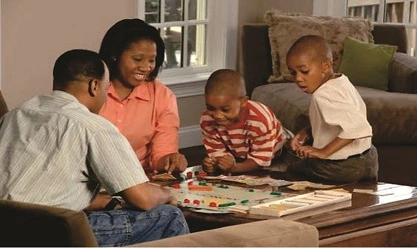
become some of the most valuable investments in a family. Make time to eat together when possible.
Create opportunities for family conversations. Celebrate birthdays and
achievements. Take walks together. Visit one another. Pray together if faith is
part of your family life. Discuss challenges openly. Laugh together.
The objective is not to create a perfect
family but to create shared experiences that strengthen emotional connection. A family that continually gives to one
another develops a culture of care. Members begin to understand that they are
not merely living under the same roof; they are part of one another's lives.
2. Learn to forgive
No family is without misunderstandings. People
will say the wrong things. Feelings will be hurt. Expectations will sometimes
be disappointed. Couples will disagree, parents will misunderstand their
children, and siblings may offend one another.
What makes a family strong is therefore not the absence of conflict but
the ability to navigate conflict without destroying the relationship.
Forgiveness is one of the most important
attitudes a family can develop. Forgiving someone does not mean pretending that
an offence never happened or approving harmful behaviour. Rather, forgiveness
is a conscious decision not to allow an offence to permanently control the
relationship. In healthy families, members learn how to apologise, accept
apologies, correct mistakes and move forward.
You do not always have to win every
argument. You do not always have to prove that you were right. Sometimes,
preserving the relationship is more valuable than winning the disagreement. This
is particularly important for parents because children learn forgiveness by
watching adults practise it. When children see their parents resolve
disagreements respectfully, apologise when they are wrong and give one another
room to grow, they learn that conflict does not necessarily mean the end of a
relationship.
Read: 3 Daily Habits That Build Stronger and Happier Relationships and Marriages
However, forgiveness should not be
confused with tolerating abuse, manipulation or repeated destructive behaviour.
Where serious harm is involved, appropriate boundaries, accountability and
professional help may be necessary. The goal is to build a family where
mistakes can be addressed without turning every mistake into a permanent label.
Forgiveness creates room for healing, while bitterness creates room for
distance.
3. Always communicate
Many family problems do not begin with
hatred. They begin with silence, assumptions, and unresolved conversations. When
communication breaks down, people begin to interpret situations according to
their own fears. A wife may wonder why her husband suddenly stays out late. A
husband may begin to suspect his wife because she has become unusually
withdrawn. Parents may struggle to understand the sudden change in their
teenager. Siblings may carry resentment for years because nobody ever addressed
what happened.
The absence of communication creates space
for assumptions, and assumptions can easily become conclusions. This is why families need an atmosphere where
members can speak honestly without immediately being attacked, mocked, or
dismissed.
Ask questions instead of jumping to
conclusions. Allow family members to explain themselves. Discuss difficult
issues when everyone is calm rather than waiting until emotions have reached
their highest point. Parents should particularly understand that communication
with children must evolve as children grow. A teenager may not need the same
style of conversation that worked when he or she was five years old. Children
grow, their questions change, their social environments change, and their
emotional needs change.
Healthy communication also involves
knowing when to speak and when to remain silent. Not every disagreement
requires shouting, and not every correction requires humiliation. When family
members can say, “I am hurt,” “I need help,” “I don't understand,” “I made a
mistake,” or “Can we talk about this?” without feeling unsafe, emotional
intimacy begins to grow. Communication makes the home a place where problems
can be confronted before they become crises.
4. Appreciate and encourage
one another
People flourish where they feel valued. One
of the simplest ways to strengthen a family relationship is to learn how to
recognise and appreciate the efforts of its members. Unfortunately, people
sometimes become so familiar with one another that they stop noticing what
others do. A spouse may work tirelessly to provide for the family but rarely
hear the words, “Thank you.” A mother may spend countless hours caring for
everyone but receive little recognition. A father may make sacrifices that his
children do not understand. A child may make genuine progress but hear only
about what he or she is doing wrong.
When efforts consistently go unnoticed
while mistakes receive constant attention, people can become discouraged. Appreciation
does not mean ignoring weaknesses. It means recognising that correction and
encouragement should coexist. Tell your spouse when you appreciate something
they have done. Thank your children for helping around the house. Celebrate
their progress, not only their achievements. Encourage their gifts and talents.
Let your siblings know that their presence matters.
Read: Signs Of A Clingy Girlfriend: Are You Caring, Or Are You Overly Dependent?
Sometimes a simple sentence such as “I am
proud of you,” “Thank you for helping,” “I believe in you,” or “You handled
that well” can mean more than you realise. Every member of a family needs to
know that they are valued beyond their usefulness. People should not have to
become extraordinarily successful before they receive encouragement from the
people closest to them.
At the same time, appreciation should not
prevent healthy correction. A loving family knows how to celebrate strengths
while addressing weaknesses with wisdom and respect. When appreciation becomes
part of the family's culture, members are more likely to contribute positively
because they know their efforts are seen. What you consistently appreciate, you
encourage; what you consistently encourage, you help to grow.
5. Create a healthy balance
Life is filled with responsibilities. There
is work, business, career development, ministry, education, friendships, social
commitments and countless other demands competing for our attention. But in the
middle of pursuing success, we must not neglect the people with whom we intend
to share that success. It is possible to build an impressive career while
simultaneously building a lonely home.
It is possible to provide everything money
can buy for your family while failing to provide the emotional presence they
need. This is why balance is essential. Being committed to your family does not
mean abandoning your career or personal goals. Rather, it means recognising
that every important area of life requires appropriate attention. Create time
for your family. Protect meaningful family moments. Put away distractions when
someone is trying to talk to you. Know when work must wait. Know when your family
needs your presence more than your productivity.
Parents especially need to understand that
children do not only remember what they were given; they often remember how
available their parents were. A family does not need every member to be present
every minute of every day. What it needs is intentional connection. Quality
time is not necessarily expensive. It may be a meal around the same table, a
conversation before bedtime, a weekend outing, watching a movie together,
helping with household activities, visiting relatives, or simply sitting
together and talking.
Building a Stronger Family Is
Everyone's Responsibility
A strong family relationship cannot be
created by one person alone. The father has a role. The mother has a role.
Children have a role. Siblings have a role. Extended family members also have
responsibilities in maintaining healthy relationships. We must stop expecting
one person to carry the entire emotional weight of a family. If you want a
stronger family, begin with your own attitude. And learn to balance your
responsibilities so that the people you love do not become strangers while you
are busy building a better life for them.
The objective is not to create a family
without disagreements. Such a family does not exist. The objective is to create
a family where disagreements can be handled with maturity, where mistakes can
be corrected without destroying dignity, where forgiveness is available, where
communication is encouraged, and where every member knows, “I belong here.”
At the end of the day, what matters is not
merely what we possess, what we think, or what we claim to be. What matters is
what we have done with the people entrusted to us and the relationships we have
been given. A family becomes stronger when love is practised, not merely
professed.
So, give your family your presence. Give
them your attention. Give them your encouragement. Give them room to grow.
Forgive when necessary. Communicate when things become difficult. Appreciate
their efforts and create a healthy balance between your family and everything
else demanding your attention. Because long after many of life's achievements
have faded, the relationships we built and the lives we influenced within our
homes may remain among our greatest legacies.











Leave your comments here